Monday, December 13, 2010

Cooling off period

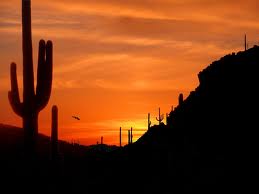
Just to be sure, I’ve waited several weeks, but now it seems safe to assume that winter has arrived here in the Sonora. Some of the signs:

• I’ve taken to wearing socks.

• My shirt is no longer a clammy layer between my back and the recliner.

• I only run one fan, maybe two, and just in the afternoon.

• Breakfast is finished before the sun comes up.

• I can get a drink of cool water—right from the tap.

• I haven’t used my furnace, but I do wear a hoodie at night.

• I’ve already closed my window at night twice in the past three weeks.

• I keep a jacket handy if I go out at night.

• Going out in daylight is pleasant no matter what the hour.

• Sometimes I cook a meal on the stove in the middle of the afternoon.

• A hot cup of coffee seems just the thing early in the morning.

• The RV park is filling up.

Yup, I'm thinkin' summer's over here in the Old Pueblo.

*

Monday, December 6, 2010

Family Feast

Today, December 6, is the Feast of St. Nicholas. The date and the occasion stand out in my mind because of a childhood custom.

In some European countries, including Poland, it was on St. Nicholas’ feast day, rather than on Christmas, that gifts were given to children. As I’m sure you know, St. Nick was the original Santa Claus.

Anyway, traditionally, the children’s shoes would be left outside the door, awaiting the nighttime passage of St. Nicholas. If a child had been good, morning would find the shoes filled with gifts and treats. If the kid’s behavior had been found wanting, then the shoes would be stuffed with the dreaded lumps of coal.

When I was a kid, Christmas was one of our two main “family” feasts, the other being our annual summer vacation trip. Now, my mother was big on anticipation. It was her belief that there was as much pleasure to be had in looking forward to an event as there was to the happening itself.

Our Christmas tree was always decorated weeks before Christmas. And Mom's seasonal mantra of behavior control, “Santa Claus is watching,” was in steady use even weeks before that. Contributing to the build up were her frequent hints of the glories to come which, when we got older, she turned into sad predictions of barren Christmas mornings that we knew were just her reverse-psychological teasers for the surprises in store.

The motivating force behind all this was that our Mom was just a big kid at heart. She was living again the joys of her childhood through me and my three sibs. She and my Dad just enjoyed the heck out of seeing us kids having a good time, and a significant portion of their lives was devoted to that pursuit. Christmas was just the perfect opportunity.

Mom used the Feast of St. Nicholas not only to increase the fun and contribute to the build up for the main event, but also as a reminder of our heritage and the original religious inspiration for holiday gift-giving. To these ends, she had us put our shoes in the hallway outside our bedroom doors on the eve of St. Nick’s feast, with sad laments about the tons of coal that were sure to result.

The next dawn, of course, saw us deep in the throes of a mini Christmas. Small toys, gadgets and wrapped holiday goodies would be overflowing our shoes and normal morning routines would be forgotten—which could be a problem if it was a school morning, as it so often was. But our parents’ joy, as well as our own, was fulfilled. And they also had the foresight to wake us up a little earlier than usual if school was on tap that day.

St. Nicholas, we thank you.

Monday, November 22, 2010

Like white on rice

There’s a peculiarly refreshing drink that becomes more commonly available the closer one comes to the Mexican border. It’s called horchata. Recipes for horchata include a variety of ground grains or nuts, but the version most commonly found along our southern border is made with ground rice.

I was introduced to horchata at a farewell luncheon held at a Mexican restaurant in Denver in 1995. I was leaving my job there and, at the lunch, one of my colleagues pointed it out on the menu and recommended I try it. I was hooked from the first taste.

Often called agua de horchata, it’s lighter than the so-called rice milks sold in grocery stores and actually has a more pronounced rice flavor. Its origins go back to Spain; there are even indications of Moorish influence.

There are numerous formulas on the net, but the only really tricky steps are grinding the rice and then straining the ground rice from the final beverage. After that process, generally it’s sweetened and usually flavored with cinnamon.

Of course, the simplest thing is to buy horchata already prepared. Some Mexican restaurants serve it and bottled varieties can be found in some groceries. My favorite brand is Kern, which is carried by Albertson’s here in Tucson.

Then all you need is a tall glass filled with ice and you’ve got a real thirst-quencher. In fact, there’s some horchata in my refrigerator right now—and I think I can hear it calling my name.

Monday, November 8, 2010

Time out

I lost two days last week.

I discovered I’d missed Wednesday about 6 a.m. on Thursday, when the casual disposition of my cursor on the desktop clock revealed that my own internal calendar was out of synch with the real world by a full day. Right there was a rap in the chops!

What’s worse, in the same fashion I found that what I thought was 4:15 on Saturday afternoon was actually 4:15 on Sunday afternoon. Twice in one week! Talk about being gobsmacked!

Now, I’ve lost track of days before, on extended vacations and since I’ve been retired. But never a full, 24-hour day. And never twice in one week.

I’m sure my heat-mitigating, topsy-turvy sleep pattern contributed to the confusion, but it was still a disorienting shock to the system.

Later, I was thinking about those incidents and how the arbitrary names of an otherwise indistinguishable sequence of solar cycles could cause an actual physical experience of wooziness, almost a mild nausea. Of course, that discomfort might be partially attributable to my OCD personality, though the current condition of my living quarters would seem to put the lie to that diagnosis.

Even so, it took me back to a long-standing curiosity about the nature of time, originating in my catechetical youth when the concept of eternity first wormed its way into my gray matter. This interest took an amusing turn when, following my Star Trek phase, I began to wonder about the time-travel value of crossing from one time zone into another. Especially, I was bemused with the notion of what temporal flux state one would occupy if one crossed precisely at the stroke of midnight. During those years I pictured every cross-country trip as a science fiction experience.

However, when I eventually had to deal with the repeated switches between daylight savings and standard time, I began to suspect that the whole notion of time might be just a capricious collection of classifications made up to distinguish otherwise nonexistent entities, like inch and gallon, names for units of measure but which did not themselves have actual materiality.  I mean, you can see a mile of highway, but a mile (or a kilometer) doesn’t really have substance unless it’s describing something else. Which is why there is not a one-word answer to the question, how many bushels are in a mile? Or does anyone even still remember what a bushel is? Or have bushels and pecks been subsumed by pounds and tons like rotary dial phones evolved into push buttons? It’s sad, in a way.

Is this getting too dense for this blog? Well, it’s about to get worse.

Physicist
Stephen Hawking
By the time I finally figured out that this whole time business fell within the realm of physics, not metaphysics (go ahead, paste it in your dictionary search engine, paying special attention to the religious connotation), even graduate school was but a distant memory. I was saved, however, by the invention of the internet and by books like Stephen Hawking’s A Brief History of Time, attempts to simplify and popularize this topic.

To my chagrin, though, I was soon to discover that the concept of time had been repackaged as space-time, as in “the space-time continuum.” And now there was quantum physics which seemed to be able to twist time like Silly Putty; even some astrophysicists seemed stymied.

I felt like the kid who found lumps of coal in his Christmas stocking. What kind of deal was this? I spend most of my life trying to define time and, just when I think I might have it wrapped up, they go and introduce a new model.

Speaking of which, that brings up a unit of time uniquely specific to the automobile industry, the model year. So, are there model seconds and model minutes in a model day? Is there a model space-time continuum? 

Let me know if you can figure it out. I’m still wondering what happened to last Wednesday.


Tuesday, November 2, 2010

A seasonal offering


Oops! Missed a couple deadlines. Oh, well, don't want to take these things too seriously. So, here's a favorite of mine for many years.


Easy Carmel Apples
Ingredient List
~ 1 16 oz bag wrapped carmels (for this recipe, I prefer Brach's)
~ 8-12 (pending size) apples (I prefer Granny Smith)
Preparation
In a comfortable chair (I prefer a recliner), unwrap 1 carmel, place in mouth. Take a bite of apple. Add additional carmels or apple to taste.

Monday, October 25, 2010

Desert lullaby

It’s finally cooled off a bit here in Tucson, which means temps have dropped all the way down into the lower 90s.

To cope with the heat I’ve been watching movies about climbing frigid mountain peaks and documentaries about exploring Antarctica. I’ve also resumed my practice of sleeping during the day and taking advantage of the cooler nighttime temps to…well, not do much at all.

Tucson is set to mark its warmest October on record. I don’t know about Tucson, but this for sure is my hottest October ever.

But do I complain? Darn betcha!

The nights, though, have been sweet.

Cooling breezes barely whisper through my open window. Night birds call from the palo verde. In the distance, the plaintive keening of a diesel engine’s horn reminds one of places far away—remote in distance, more so in time.

The Sonora embraces.